

Healing Truths
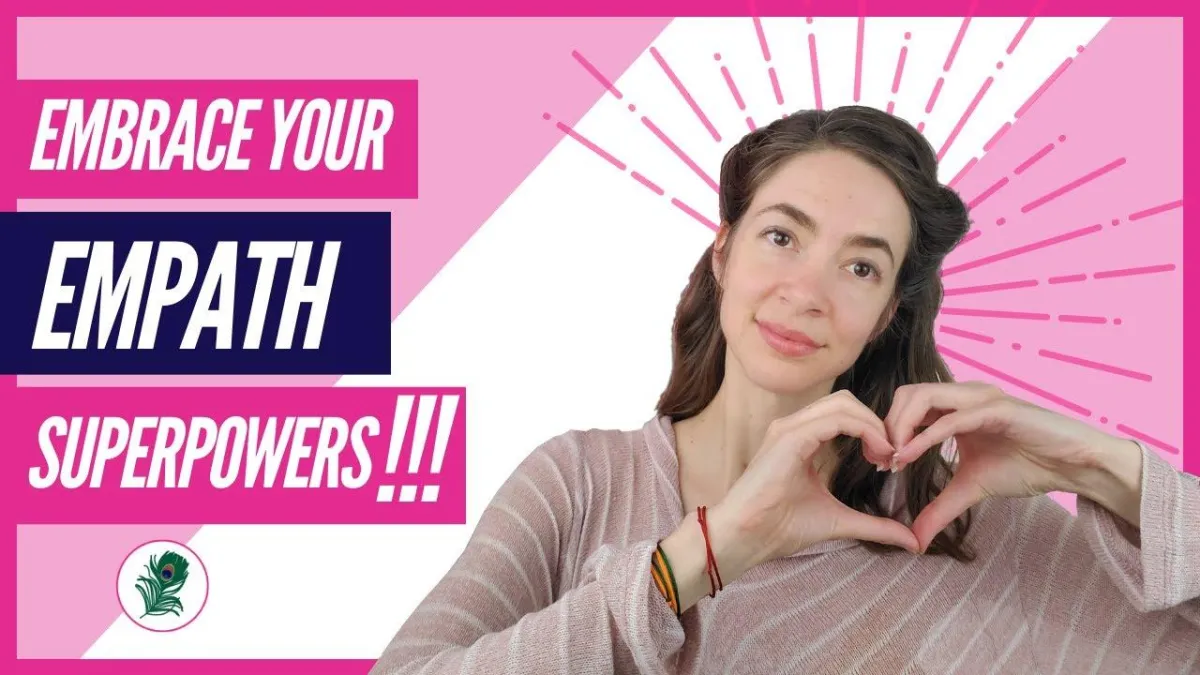
Am I an Empath? | Embrace Your Empath Superpowers
Leslie Huddart L.Ac.
Am I an Empath? | Embrace Your Empath Superpowers
What do you do when you are a sensitive person?
My whole life, I have been a sensitive person growing up in a family with not super sensitive people. Just like anything else, when we grow up surrounded by people who are different from us, which is not wrong, it's how life works. We don't always get a lot of self-knowledge about that. So the more that I've come to learn about myself, the more that I've done therapy over the years, and especially the more that I've gotten spiritual training, understanding of the Subtle Body, I really come to understand how to manage and not just manage, but really bring out the positive part of your sensitivity. A term that you may want to know that you may or may not be familiar with is a term called HSP or Highly sensitive person.
So there is a psychologist who researched a lot of this and found that a certain percentage of the population is this type of highly sensitive person. I would call it just nervous system-more sensitive. So one of the things that I want you to know the most is that I feel that there are these two parts to sensitivity:
Perceptive ability
Tolerance
What some people notice is that they are more sensitive. On the upside of that, there is this ability to perceive things that are a little more subtle, kind of having a sense of how other people feel, having a sense of the room, kind of an inherent understanding of what people need or what people are going through. Maybe an intuitive sense about how to navigate through different situations or make decisions. And also a lot of creativity in terms of thinking about solutions that are outside of the box that other people haven't thought of or creating in a really expressive, artistic way.
Tolerance
As the ability to tolerate or move through or maintain one's homeostasis in the midst of a lot of stimulus going on, and the stimulus could be a loud, noisy room. It could be a background activity. It could be other people having strong emotions that they're expressing or not expressing. Sitting in a room with someone who's really super angry is more alarming to someone who has a higher ability or sensitivity than someone who's just an average Joe person. This is why different professions in different situations are better for some types of people than other types of people.
I can work as a healer and I can understand what someone's feeling when they walk in the door. So what I want you to take away from this, whether you feel like you're a sensitive person or not, is this natural understanding of how energy works, that every particular constitution and arrangement has a certain ability and a certain need. I'm able to do certain things. Therefore I need certain things. This is just like anything else. If you have a different job, you need the right tools and equipment. And for a sensitive person, if I have the right sensitivity, I also need a certain environment. What often happens when women come to me, is that because they are sensitive and because it's been confusing or hard to really get our needs met in terms of situations or tolerance, we sometimes not wrongly develop a sense that because I'm sensitive, I just have to opt-out of things.
If we really acknowledge that we have certain needs and we do better in some situations than in other situations, then when someone invites us to go hang out at allowed bar past 10 o'clock, that's just not gonna work, not gonna work by my nervous system. It's gonna not work for my needs.
Essentially our Subtle Body is the combination of our mind-body connection. It's partly our mind. It's partly on our conscious mind. It's partly our qi body where the meridians are running. The secret is that the health and the functioning of your subtle body is the number one factor in how much healthy tolerance you are able to have as a sensitive person. If you are a sensitive person, you can still increase your tolerance by healing your subtle Body. Some signs that you're having subtle Body stuff going on will be like zero tolerance. Like if you're someone who feels like I tend to take on energy that's not mine. That's a subtle body problem. If you are someone who, if I walk into a room and it's too much, and I just get overwhelmed, like if your tolerance window is so little, this is a sign that you're having some Subtle Body problems that need to be healed.
Techniques and straightforward methods that I teach
The tricky part is that we didn't learn this in elementary, it is common sense. The other thing is the mistake that I want you to know. If you feel like you're a sensitive person, and especially if you feel like you have trouble getting your needs met with your romantic partner, with your family, the truth is, is that, and I will say this also for myself, is that being a sensitive person, we learned at some point that it wasn't likely that we were going to get our needs met so we just kind of stopped trying, and maybe we didn't even realize that that was happening, but generally that's what happens.
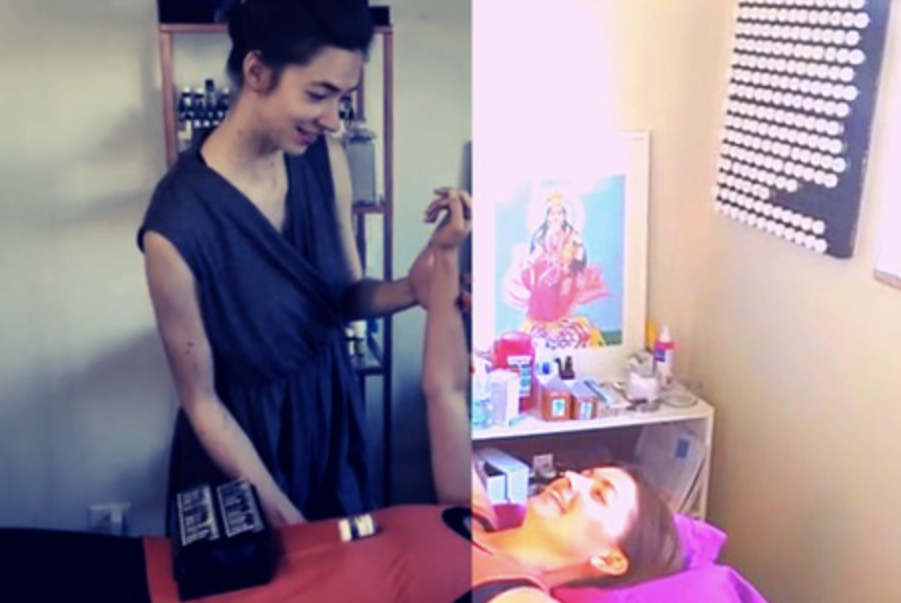
--->RELEASE THE TRAPPED TRAUMA FROM YOUR BODY (WITHOUT YEARS OF THERAPY)<---
Disclaimer: This program is not intended to be a substitute for professional mental health or counseling services. No practitioner-patient relationship is established and the training content is for educational purposes only and does not constitute medical advice. These statements have not been evaluated by the FDA and nothing here is intended to diagnose, cure or treat any disorders.
Watch Leslie Huddart L.Ac. YouTube Videos
Facebook. Instagram Youtube Website

Guide for Empaths
Am I an Empath? | Embrace Your Empath Superpowers
Leslie Huddart L.Ac.
Am I an Empath? | Embrace Your Empath Superpowers
What do you do when you are a sensitive person?
My whole life, I have been a sensitive person growing up in a family with not super sensitive people. Just like anything else, when we grow up surrounded by people who are different from us, which is not wrong, it's how life works. We don't always get a lot of self-knowledge about that. So the more that I've come to learn about myself, the more that I've done therapy over the years, and especially the more that I've gotten spiritual training, understanding of the Subtle Body, I really come to understand how to manage and not just manage, but really bring out the positive part of your sensitivity. A term that you may want to know that you may or may not be familiar with is a term called HSP or Highly sensitive person.
So there is a psychologist who researched a lot of this and found that a certain percentage of the population is this type of highly sensitive person. I would call it just nervous system-more sensitive. So one of the things that I want you to know the most is that I feel that there are these two parts to sensitivity:
Perceptive ability
Tolerance
What some people notice is that they are more sensitive. On the upside of that, there is this ability to perceive things that are a little more subtle, kind of having a sense of how other people feel, having a sense of the room, kind of an inherent understanding of what people need or what people are going through. Maybe an intuitive sense about how to navigate through different situations or make decisions. And also a lot of creativity in terms of thinking about solutions that are outside of the box that other people haven't thought of or creating in a really expressive, artistic way.
Tolerance
As the ability to tolerate or move through or maintain one's homeostasis in the midst of a lot of stimulus going on, and the stimulus could be a loud, noisy room. It could be a background activity. It could be other people having strong emotions that they're expressing or not expressing. Sitting in a room with someone who's really super angry is more alarming to someone who has a higher ability or sensitivity than someone who's just an average Joe person. This is why different professions in different situations are better for some types of people than other types of people.
I can work as a healer and I can understand what someone's feeling when they walk in the door. So what I want you to take away from this, whether you feel like you're a sensitive person or not, is this natural understanding of how energy works, that every particular constitution and arrangement has a certain ability and a certain need. I'm able to do certain things. Therefore I need certain things. This is just like anything else. If you have a different job, you need the right tools and equipment. And for a sensitive person, if I have the right sensitivity, I also need a certain environment. What often happens when women come to me, is that because they are sensitive and because it's been confusing or hard to really get our needs met in terms of situations or tolerance, we sometimes not wrongly develop a sense that because I'm sensitive, I just have to opt-out of things.
If we really acknowledge that we have certain needs and we do better in some situations than in other situations, then when someone invites us to go hang out at allowed bar past 10 o'clock, that's just not gonna work, not gonna work by my nervous system. It's gonna not work for my needs.
Essentially our Subtle Body is the combination of our mind-body connection. It's partly our mind. It's partly on our conscious mind. It's partly our qi body where the meridians are running. The secret is that the health and the functioning of your subtle body is the number one factor in how much healthy tolerance you are able to have as a sensitive person. If you are a sensitive person, you can still increase your tolerance by healing your subtle Body. Some signs that you're having subtle Body stuff going on will be like zero tolerance. Like if you're someone who feels like I tend to take on energy that's not mine. That's a subtle body problem. If you are someone who, if I walk into a room and it's too much, and I just get overwhelmed, like if your tolerance window is so little, this is a sign that you're having some Subtle Body problems that need to be healed.
Techniques and straightforward methods that I teach
The tricky part is that we didn't learn this in elementary, it is common sense. The other thing is the mistake that I want you to know. If you feel like you're a sensitive person, and especially if you feel like you have trouble getting your needs met with your romantic partner, with your family, the truth is, is that, and I will say this also for myself, is that being a sensitive person, we learned at some point that it wasn't likely that we were going to get our needs met so we just kind of stopped trying, and maybe we didn't even realize that that was happening, but generally that's what happens.
--->RELEASE THE TRAPPED TRAUMA FROM YOUR BODY (WITHOUT YEARS OF THERAPY)<---
Disclaimer: This program is not intended to be a substitute for professional mental health or counseling services. No practitioner-patient relationship is established and the training content is for educational purposes only and does not constitute medical advice. These statements have not been evaluated by the FDA and nothing here is intended to diagnose, cure or treat any disorders.
Watch Leslie Huddart L.Ac. YouTube Videos
Facebook. Instagram Youtube Website
Dating for Empaths
Am I an Empath? | Embrace Your Empath Superpowers
Leslie Huddart L.Ac.
Am I an Empath? | Embrace Your Empath Superpowers
What do you do when you are a sensitive person?
My whole life, I have been a sensitive person growing up in a family with not super sensitive people. Just like anything else, when we grow up surrounded by people who are different from us, which is not wrong, it's how life works. We don't always get a lot of self-knowledge about that. So the more that I've come to learn about myself, the more that I've done therapy over the years, and especially the more that I've gotten spiritual training, understanding of the Subtle Body, I really come to understand how to manage and not just manage, but really bring out the positive part of your sensitivity. A term that you may want to know that you may or may not be familiar with is a term called HSP or Highly sensitive person.
So there is a psychologist who researched a lot of this and found that a certain percentage of the population is this type of highly sensitive person. I would call it just nervous system-more sensitive. So one of the things that I want you to know the most is that I feel that there are these two parts to sensitivity:
Perceptive ability
Tolerance
What some people notice is that they are more sensitive. On the upside of that, there is this ability to perceive things that are a little more subtle, kind of having a sense of how other people feel, having a sense of the room, kind of an inherent understanding of what people need or what people are going through. Maybe an intuitive sense about how to navigate through different situations or make decisions. And also a lot of creativity in terms of thinking about solutions that are outside of the box that other people haven't thought of or creating in a really expressive, artistic way.
Tolerance
As the ability to tolerate or move through or maintain one's homeostasis in the midst of a lot of stimulus going on, and the stimulus could be a loud, noisy room. It could be a background activity. It could be other people having strong emotions that they're expressing or not expressing. Sitting in a room with someone who's really super angry is more alarming to someone who has a higher ability or sensitivity than someone who's just an average Joe person. This is why different professions in different situations are better for some types of people than other types of people.
I can work as a healer and I can understand what someone's feeling when they walk in the door. So what I want you to take away from this, whether you feel like you're a sensitive person or not, is this natural understanding of how energy works, that every particular constitution and arrangement has a certain ability and a certain need. I'm able to do certain things. Therefore I need certain things. This is just like anything else. If you have a different job, you need the right tools and equipment. And for a sensitive person, if I have the right sensitivity, I also need a certain environment. What often happens when women come to me, is that because they are sensitive and because it's been confusing or hard to really get our needs met in terms of situations or tolerance, we sometimes not wrongly develop a sense that because I'm sensitive, I just have to opt-out of things.
If we really acknowledge that we have certain needs and we do better in some situations than in other situations, then when someone invites us to go hang out at allowed bar past 10 o'clock, that's just not gonna work, not gonna work by my nervous system. It's gonna not work for my needs.
Essentially our Subtle Body is the combination of our mind-body connection. It's partly our mind. It's partly on our conscious mind. It's partly our qi body where the meridians are running. The secret is that the health and the functioning of your subtle body is the number one factor in how much healthy tolerance you are able to have as a sensitive person. If you are a sensitive person, you can still increase your tolerance by healing your subtle Body. Some signs that you're having subtle Body stuff going on will be like zero tolerance. Like if you're someone who feels like I tend to take on energy that's not mine. That's a subtle body problem. If you are someone who, if I walk into a room and it's too much, and I just get overwhelmed, like if your tolerance window is so little, this is a sign that you're having some Subtle Body problems that need to be healed.
Techniques and straightforward methods that I teach
The tricky part is that we didn't learn this in elementary, it is common sense. The other thing is the mistake that I want you to know. If you feel like you're a sensitive person, and especially if you feel like you have trouble getting your needs met with your romantic partner, with your family, the truth is, is that, and I will say this also for myself, is that being a sensitive person, we learned at some point that it wasn't likely that we were going to get our needs met so we just kind of stopped trying, and maybe we didn't even realize that that was happening, but generally that's what happens.
--->RELEASE THE TRAPPED TRAUMA FROM YOUR BODY (WITHOUT YEARS OF THERAPY)<---
Disclaimer: This program is not intended to be a substitute for professional mental health or counseling services. No practitioner-patient relationship is established and the training content is for educational purposes only and does not constitute medical advice. These statements have not been evaluated by the FDA and nothing here is intended to diagnose, cure or treat any disorders.
Watch Leslie Huddart L.Ac. YouTube Videos
Facebook. Instagram Youtube Website
Chronic Pain
Am I an Empath? | Embrace Your Empath Superpowers
Leslie Huddart L.Ac.
Am I an Empath? | Embrace Your Empath Superpowers
What do you do when you are a sensitive person?
My whole life, I have been a sensitive person growing up in a family with not super sensitive people. Just like anything else, when we grow up surrounded by people who are different from us, which is not wrong, it's how life works. We don't always get a lot of self-knowledge about that. So the more that I've come to learn about myself, the more that I've done therapy over the years, and especially the more that I've gotten spiritual training, understanding of the Subtle Body, I really come to understand how to manage and not just manage, but really bring out the positive part of your sensitivity. A term that you may want to know that you may or may not be familiar with is a term called HSP or Highly sensitive person.
So there is a psychologist who researched a lot of this and found that a certain percentage of the population is this type of highly sensitive person. I would call it just nervous system-more sensitive. So one of the things that I want you to know the most is that I feel that there are these two parts to sensitivity:
Perceptive ability
Tolerance
What some people notice is that they are more sensitive. On the upside of that, there is this ability to perceive things that are a little more subtle, kind of having a sense of how other people feel, having a sense of the room, kind of an inherent understanding of what people need or what people are going through. Maybe an intuitive sense about how to navigate through different situations or make decisions. And also a lot of creativity in terms of thinking about solutions that are outside of the box that other people haven't thought of or creating in a really expressive, artistic way.
Tolerance
As the ability to tolerate or move through or maintain one's homeostasis in the midst of a lot of stimulus going on, and the stimulus could be a loud, noisy room. It could be a background activity. It could be other people having strong emotions that they're expressing or not expressing. Sitting in a room with someone who's really super angry is more alarming to someone who has a higher ability or sensitivity than someone who's just an average Joe person. This is why different professions in different situations are better for some types of people than other types of people.
I can work as a healer and I can understand what someone's feeling when they walk in the door. So what I want you to take away from this, whether you feel like you're a sensitive person or not, is this natural understanding of how energy works, that every particular constitution and arrangement has a certain ability and a certain need. I'm able to do certain things. Therefore I need certain things. This is just like anything else. If you have a different job, you need the right tools and equipment. And for a sensitive person, if I have the right sensitivity, I also need a certain environment. What often happens when women come to me, is that because they are sensitive and because it's been confusing or hard to really get our needs met in terms of situations or tolerance, we sometimes not wrongly develop a sense that because I'm sensitive, I just have to opt-out of things.
If we really acknowledge that we have certain needs and we do better in some situations than in other situations, then when someone invites us to go hang out at allowed bar past 10 o'clock, that's just not gonna work, not gonna work by my nervous system. It's gonna not work for my needs.
Essentially our Subtle Body is the combination of our mind-body connection. It's partly our mind. It's partly on our conscious mind. It's partly our qi body where the meridians are running. The secret is that the health and the functioning of your subtle body is the number one factor in how much healthy tolerance you are able to have as a sensitive person. If you are a sensitive person, you can still increase your tolerance by healing your subtle Body. Some signs that you're having subtle Body stuff going on will be like zero tolerance. Like if you're someone who feels like I tend to take on energy that's not mine. That's a subtle body problem. If you are someone who, if I walk into a room and it's too much, and I just get overwhelmed, like if your tolerance window is so little, this is a sign that you're having some Subtle Body problems that need to be healed.
Techniques and straightforward methods that I teach
The tricky part is that we didn't learn this in elementary, it is common sense. The other thing is the mistake that I want you to know. If you feel like you're a sensitive person, and especially if you feel like you have trouble getting your needs met with your romantic partner, with your family, the truth is, is that, and I will say this also for myself, is that being a sensitive person, we learned at some point that it wasn't likely that we were going to get our needs met so we just kind of stopped trying, and maybe we didn't even realize that that was happening, but generally that's what happens.
--->RELEASE THE TRAPPED TRAUMA FROM YOUR BODY (WITHOUT YEARS OF THERAPY)<---
Disclaimer: This program is not intended to be a substitute for professional mental health or counseling services. No practitioner-patient relationship is established and the training content is for educational purposes only and does not constitute medical advice. These statements have not been evaluated by the FDA and nothing here is intended to diagnose, cure or treat any disorders.
Watch Leslie Huddart L.Ac. YouTube Videos
Facebook. Instagram Youtube Website
Spiritual but Not Religious
Am I an Empath? | Embrace Your Empath Superpowers
Leslie Huddart L.Ac.
Am I an Empath? | Embrace Your Empath Superpowers
What do you do when you are a sensitive person?
My whole life, I have been a sensitive person growing up in a family with not super sensitive people. Just like anything else, when we grow up surrounded by people who are different from us, which is not wrong, it's how life works. We don't always get a lot of self-knowledge about that. So the more that I've come to learn about myself, the more that I've done therapy over the years, and especially the more that I've gotten spiritual training, understanding of the Subtle Body, I really come to understand how to manage and not just manage, but really bring out the positive part of your sensitivity. A term that you may want to know that you may or may not be familiar with is a term called HSP or Highly sensitive person.
So there is a psychologist who researched a lot of this and found that a certain percentage of the population is this type of highly sensitive person. I would call it just nervous system-more sensitive. So one of the things that I want you to know the most is that I feel that there are these two parts to sensitivity:
Perceptive ability
Tolerance
What some people notice is that they are more sensitive. On the upside of that, there is this ability to perceive things that are a little more subtle, kind of having a sense of how other people feel, having a sense of the room, kind of an inherent understanding of what people need or what people are going through. Maybe an intuitive sense about how to navigate through different situations or make decisions. And also a lot of creativity in terms of thinking about solutions that are outside of the box that other people haven't thought of or creating in a really expressive, artistic way.
Tolerance
As the ability to tolerate or move through or maintain one's homeostasis in the midst of a lot of stimulus going on, and the stimulus could be a loud, noisy room. It could be a background activity. It could be other people having strong emotions that they're expressing or not expressing. Sitting in a room with someone who's really super angry is more alarming to someone who has a higher ability or sensitivity than someone who's just an average Joe person. This is why different professions in different situations are better for some types of people than other types of people.
I can work as a healer and I can understand what someone's feeling when they walk in the door. So what I want you to take away from this, whether you feel like you're a sensitive person or not, is this natural understanding of how energy works, that every particular constitution and arrangement has a certain ability and a certain need. I'm able to do certain things. Therefore I need certain things. This is just like anything else. If you have a different job, you need the right tools and equipment. And for a sensitive person, if I have the right sensitivity, I also need a certain environment. What often happens when women come to me, is that because they are sensitive and because it's been confusing or hard to really get our needs met in terms of situations or tolerance, we sometimes not wrongly develop a sense that because I'm sensitive, I just have to opt-out of things.
If we really acknowledge that we have certain needs and we do better in some situations than in other situations, then when someone invites us to go hang out at allowed bar past 10 o'clock, that's just not gonna work, not gonna work by my nervous system. It's gonna not work for my needs.
Essentially our Subtle Body is the combination of our mind-body connection. It's partly our mind. It's partly on our conscious mind. It's partly our qi body where the meridians are running. The secret is that the health and the functioning of your subtle body is the number one factor in how much healthy tolerance you are able to have as a sensitive person. If you are a sensitive person, you can still increase your tolerance by healing your subtle Body. Some signs that you're having subtle Body stuff going on will be like zero tolerance. Like if you're someone who feels like I tend to take on energy that's not mine. That's a subtle body problem. If you are someone who, if I walk into a room and it's too much, and I just get overwhelmed, like if your tolerance window is so little, this is a sign that you're having some Subtle Body problems that need to be healed.
Techniques and straightforward methods that I teach
The tricky part is that we didn't learn this in elementary, it is common sense. The other thing is the mistake that I want you to know. If you feel like you're a sensitive person, and especially if you feel like you have trouble getting your needs met with your romantic partner, with your family, the truth is, is that, and I will say this also for myself, is that being a sensitive person, we learned at some point that it wasn't likely that we were going to get our needs met so we just kind of stopped trying, and maybe we didn't even realize that that was happening, but generally that's what happens.
--->RELEASE THE TRAPPED TRAUMA FROM YOUR BODY (WITHOUT YEARS OF THERAPY)<---
Disclaimer: This program is not intended to be a substitute for professional mental health or counseling services. No practitioner-patient relationship is established and the training content is for educational purposes only and does not constitute medical advice. These statements have not been evaluated by the FDA and nothing here is intended to diagnose, cure or treat any disorders.
Watch Leslie Huddart L.Ac. YouTube Videos
Facebook. Instagram Youtube Website
Natural Health
Am I an Empath? | Embrace Your Empath Superpowers
Leslie Huddart L.Ac.
Am I an Empath? | Embrace Your Empath Superpowers
What do you do when you are a sensitive person?
My whole life, I have been a sensitive person growing up in a family with not super sensitive people. Just like anything else, when we grow up surrounded by people who are different from us, which is not wrong, it's how life works. We don't always get a lot of self-knowledge about that. So the more that I've come to learn about myself, the more that I've done therapy over the years, and especially the more that I've gotten spiritual training, understanding of the Subtle Body, I really come to understand how to manage and not just manage, but really bring out the positive part of your sensitivity. A term that you may want to know that you may or may not be familiar with is a term called HSP or Highly sensitive person.
So there is a psychologist who researched a lot of this and found that a certain percentage of the population is this type of highly sensitive person. I would call it just nervous system-more sensitive. So one of the things that I want you to know the most is that I feel that there are these two parts to sensitivity:
Perceptive ability
Tolerance
What some people notice is that they are more sensitive. On the upside of that, there is this ability to perceive things that are a little more subtle, kind of having a sense of how other people feel, having a sense of the room, kind of an inherent understanding of what people need or what people are going through. Maybe an intuitive sense about how to navigate through different situations or make decisions. And also a lot of creativity in terms of thinking about solutions that are outside of the box that other people haven't thought of or creating in a really expressive, artistic way.
Tolerance
As the ability to tolerate or move through or maintain one's homeostasis in the midst of a lot of stimulus going on, and the stimulus could be a loud, noisy room. It could be a background activity. It could be other people having strong emotions that they're expressing or not expressing. Sitting in a room with someone who's really super angry is more alarming to someone who has a higher ability or sensitivity than someone who's just an average Joe person. This is why different professions in different situations are better for some types of people than other types of people.
I can work as a healer and I can understand what someone's feeling when they walk in the door. So what I want you to take away from this, whether you feel like you're a sensitive person or not, is this natural understanding of how energy works, that every particular constitution and arrangement has a certain ability and a certain need. I'm able to do certain things. Therefore I need certain things. This is just like anything else. If you have a different job, you need the right tools and equipment. And for a sensitive person, if I have the right sensitivity, I also need a certain environment. What often happens when women come to me, is that because they are sensitive and because it's been confusing or hard to really get our needs met in terms of situations or tolerance, we sometimes not wrongly develop a sense that because I'm sensitive, I just have to opt-out of things.
If we really acknowledge that we have certain needs and we do better in some situations than in other situations, then when someone invites us to go hang out at allowed bar past 10 o'clock, that's just not gonna work, not gonna work by my nervous system. It's gonna not work for my needs.
Essentially our Subtle Body is the combination of our mind-body connection. It's partly our mind. It's partly on our conscious mind. It's partly our qi body where the meridians are running. The secret is that the health and the functioning of your subtle body is the number one factor in how much healthy tolerance you are able to have as a sensitive person. If you are a sensitive person, you can still increase your tolerance by healing your subtle Body. Some signs that you're having subtle Body stuff going on will be like zero tolerance. Like if you're someone who feels like I tend to take on energy that's not mine. That's a subtle body problem. If you are someone who, if I walk into a room and it's too much, and I just get overwhelmed, like if your tolerance window is so little, this is a sign that you're having some Subtle Body problems that need to be healed.
Techniques and straightforward methods that I teach
The tricky part is that we didn't learn this in elementary, it is common sense. The other thing is the mistake that I want you to know. If you feel like you're a sensitive person, and especially if you feel like you have trouble getting your needs met with your romantic partner, with your family, the truth is, is that, and I will say this also for myself, is that being a sensitive person, we learned at some point that it wasn't likely that we were going to get our needs met so we just kind of stopped trying, and maybe we didn't even realize that that was happening, but generally that's what happens.
--->RELEASE THE TRAPPED TRAUMA FROM YOUR BODY (WITHOUT YEARS OF THERAPY)<---
Disclaimer: This program is not intended to be a substitute for professional mental health or counseling services. No practitioner-patient relationship is established and the training content is for educational purposes only and does not constitute medical advice. These statements have not been evaluated by the FDA and nothing here is intended to diagnose, cure or treat any disorders.
Watch Leslie Huddart L.Ac. YouTube Videos
Facebook. Instagram Youtube Website
Uncategorized
Am I an Empath? | Embrace Your Empath Superpowers
Leslie Huddart L.Ac.
Am I an Empath? | Embrace Your Empath Superpowers
What do you do when you are a sensitive person?
My whole life, I have been a sensitive person growing up in a family with not super sensitive people. Just like anything else, when we grow up surrounded by people who are different from us, which is not wrong, it's how life works. We don't always get a lot of self-knowledge about that. So the more that I've come to learn about myself, the more that I've done therapy over the years, and especially the more that I've gotten spiritual training, understanding of the Subtle Body, I really come to understand how to manage and not just manage, but really bring out the positive part of your sensitivity. A term that you may want to know that you may or may not be familiar with is a term called HSP or Highly sensitive person.
So there is a psychologist who researched a lot of this and found that a certain percentage of the population is this type of highly sensitive person. I would call it just nervous system-more sensitive. So one of the things that I want you to know the most is that I feel that there are these two parts to sensitivity:
Perceptive ability
Tolerance
What some people notice is that they are more sensitive. On the upside of that, there is this ability to perceive things that are a little more subtle, kind of having a sense of how other people feel, having a sense of the room, kind of an inherent understanding of what people need or what people are going through. Maybe an intuitive sense about how to navigate through different situations or make decisions. And also a lot of creativity in terms of thinking about solutions that are outside of the box that other people haven't thought of or creating in a really expressive, artistic way.
Tolerance
As the ability to tolerate or move through or maintain one's homeostasis in the midst of a lot of stimulus going on, and the stimulus could be a loud, noisy room. It could be a background activity. It could be other people having strong emotions that they're expressing or not expressing. Sitting in a room with someone who's really super angry is more alarming to someone who has a higher ability or sensitivity than someone who's just an average Joe person. This is why different professions in different situations are better for some types of people than other types of people.
I can work as a healer and I can understand what someone's feeling when they walk in the door. So what I want you to take away from this, whether you feel like you're a sensitive person or not, is this natural understanding of how energy works, that every particular constitution and arrangement has a certain ability and a certain need. I'm able to do certain things. Therefore I need certain things. This is just like anything else. If you have a different job, you need the right tools and equipment. And for a sensitive person, if I have the right sensitivity, I also need a certain environment. What often happens when women come to me, is that because they are sensitive and because it's been confusing or hard to really get our needs met in terms of situations or tolerance, we sometimes not wrongly develop a sense that because I'm sensitive, I just have to opt-out of things.
If we really acknowledge that we have certain needs and we do better in some situations than in other situations, then when someone invites us to go hang out at allowed bar past 10 o'clock, that's just not gonna work, not gonna work by my nervous system. It's gonna not work for my needs.
Essentially our Subtle Body is the combination of our mind-body connection. It's partly our mind. It's partly on our conscious mind. It's partly our qi body where the meridians are running. The secret is that the health and the functioning of your subtle body is the number one factor in how much healthy tolerance you are able to have as a sensitive person. If you are a sensitive person, you can still increase your tolerance by healing your subtle Body. Some signs that you're having subtle Body stuff going on will be like zero tolerance. Like if you're someone who feels like I tend to take on energy that's not mine. That's a subtle body problem. If you are someone who, if I walk into a room and it's too much, and I just get overwhelmed, like if your tolerance window is so little, this is a sign that you're having some Subtle Body problems that need to be healed.
Techniques and straightforward methods that I teach
The tricky part is that we didn't learn this in elementary, it is common sense. The other thing is the mistake that I want you to know. If you feel like you're a sensitive person, and especially if you feel like you have trouble getting your needs met with your romantic partner, with your family, the truth is, is that, and I will say this also for myself, is that being a sensitive person, we learned at some point that it wasn't likely that we were going to get our needs met so we just kind of stopped trying, and maybe we didn't even realize that that was happening, but generally that's what happens.
--->RELEASE THE TRAPPED TRAUMA FROM YOUR BODY (WITHOUT YEARS OF THERAPY)<---
Disclaimer: This program is not intended to be a substitute for professional mental health or counseling services. No practitioner-patient relationship is established and the training content is for educational purposes only and does not constitute medical advice. These statements have not been evaluated by the FDA and nothing here is intended to diagnose, cure or treat any disorders.
Watch Leslie Huddart L.Ac. YouTube Videos
Facebook. Instagram Youtube Website