

Healing Truths
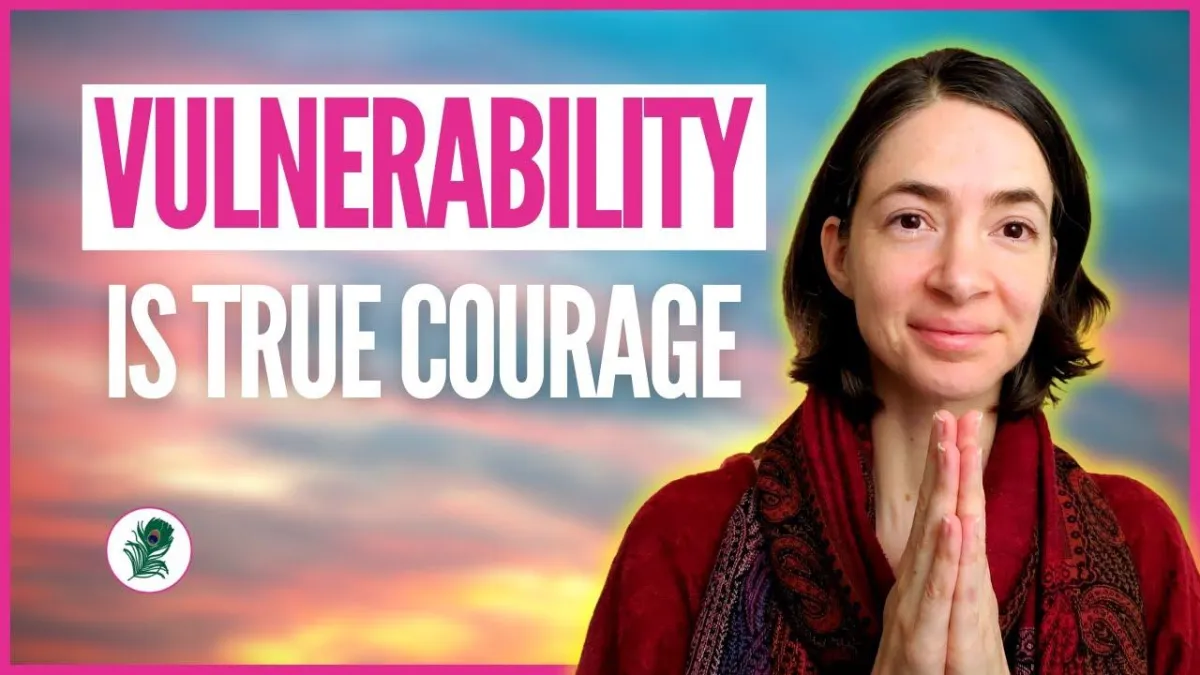
Vulnerability is True Courage | Reasons and Explanations
Leslie Huddart L.Ac.
Vulnerability is True Courage | Reasons and Explanations
What is True Courage?
Vulnerability is true courage. It's kind of addictive. The more you drop into getting vulnerable with yourself and telling the truth, you see how liberating it is.
There are great people like Dr. Brené Brown who are teaching and researching in this very fact that ancient traditions about your inner world reflecting and projecting into your outer world have been known for centuries.
But what happens when you go through this interchange and then you go back and start to interface with your friends and family who are still in the same mode?
Energetic Communication
We must not only work on our inner world, but we must make our inner world sustainable by bridging it to our outer world. We call this "Energetic Communication".
When you go through a big change in your inner world and your connection with yourself and being more vulnerable and honest, you then go back and relate with people and the relationship has maybe shifted, this could be a little bumpy.
I'm going to give you two main techniques that you can use when you start to feel into your new self, coming into a relationship with people who have known your old self and how to deal with that.
1. A Heads Up
There's a lot of fears that come up:
How do I know if my friends and family are going to be down for this?
Is this too weird? Am I too much?
Are they really friends that fit with me or not? And how do I find that out without hurting anybody's feelings or really feeling awkward myself?
The first thing is to trust that things are unfolding. The change of yourself is the most important, and then we're putting some extra Energetic Communication skillfulness on top of it.
The first technique to use is a heads-up. A heads-up can mean a lot of things.
If you need to have a big wham-bam landing, come-to-Jesus type of conversation with someone, giving them a heads up in advance is very important.
That could just be a text: "Hey, something big is coming up for me and I really wanted to talk with you about it."
Or it could be in the moment. A heads-up can just be a little phrase that signals the other person that you're about to drop down a level and talk about something serious.
I promise that this works mostly even with "non-spiritual" people.
More examples:
"I want to talk about something that's kind of important."
(revealing a little vulnerability) "I'm a little nervous about how this is going to come across but I want to talk about something a little deeper"
"I'm feeling a little worried about saying this out loud. I don't know how you're going to react but..."
This combination of heads up with some vulnerability of what's coming will send a message that "Hey, this is not normal everyday stuff. Don't joke about this. We're actually dropping down", and you might be surprised at what happens.
A caveat, sometimes if people aren't used to connecting with you in this deeper space, they may get a little nervous. They may say something a little sarcastic, so just steady yourself on the inside.
If they make a little joke or something, you just stay there and you do the same thing again, "I know it's kind of funny or you're not used to it, but I am actually being serious and I feel a little sensitive."
That in itself persists a little bit more, giving them the heads up either in advance if it's a big conversation or just with an intro that lets somebody know what's coming.
You'll be able to see in track with them, how they actually react. They might feel a little uncomfortable, but they're probably not going to get up from the table screaming.
2. Clarifying Questions
On the other side is what we call "Clarifying Questions".
After we shared something in an authentic way that is maybe new for the way that we've reacted with this friend or family member, it sometimes leaves us in this silent void where we're wondering, how did that land for them? Are they thinking that I'm totally crazy? Is this totally gonna blow up in my face?
So we often don't know what's happening with the other person and we don't actually ask.
You can train yourself to just ask the clarifying questions:
"I'm a little worried that you think I'm crazy. Is that true?"
"I'm making up a mind story that that was too weird for you. Are you freaking out right now?"
An open, direct question is also a possibility:
"How are you feeling when I say that?"
"How does it land with you when you hear me say that?"
Expressing vulnerability:
"I'm worried that that was a little too much. Do you think I'm totally insane?"
A clarifying question is usually a combination of your worry with the double-checking statement. I share the worry in my mind and then I ask them if that's actually what's happening with them.
Then, just press your lips together and see what they say.
Most of the time you'll be really relieved for them to hear, "Oh no, that doesn't sound crazy at all." or, "Actually, I feel the same way".
I can tell you over and over again, every time I've used this, it has brought someone closer. It has relieved my nervous system and it really does build authentic connections.
.--->RELEASE THE TRAPPED TRAUMA FROM YOUR BODY (WITHOUT YEARS OF THERAPY)<---
Disclaimer: This program is not intended to be a substitute for professional mental health or counseling services. No practitioner-patient relationship is established and the training content is for educational purposes only and does not constitute medical advice. These statements have not been evaluated by the FDA and nothing here is intended to diagnose, cure or treat any disorders.
Watch Leslie Huddart L.Ac. YouTube Videos
Facebook. Instagram Youtube Website

Guide for Empaths
Vulnerability is True Courage | Reasons and Explanations
Leslie Huddart L.Ac.
Vulnerability is True Courage | Reasons and Explanations
What is True Courage?
Vulnerability is true courage. It's kind of addictive. The more you drop into getting vulnerable with yourself and telling the truth, you see how liberating it is.
There are great people like Dr. Brené Brown who are teaching and researching in this very fact that ancient traditions about your inner world reflecting and projecting into your outer world have been known for centuries.
But what happens when you go through this interchange and then you go back and start to interface with your friends and family who are still in the same mode?
Energetic Communication
We must not only work on our inner world, but we must make our inner world sustainable by bridging it to our outer world. We call this "Energetic Communication".
When you go through a big change in your inner world and your connection with yourself and being more vulnerable and honest, you then go back and relate with people and the relationship has maybe shifted, this could be a little bumpy.
I'm going to give you two main techniques that you can use when you start to feel into your new self, coming into a relationship with people who have known your old self and how to deal with that.
1. A Heads Up
There's a lot of fears that come up:
How do I know if my friends and family are going to be down for this?
Is this too weird? Am I too much?
Are they really friends that fit with me or not? And how do I find that out without hurting anybody's feelings or really feeling awkward myself?
The first thing is to trust that things are unfolding. The change of yourself is the most important, and then we're putting some extra Energetic Communication skillfulness on top of it.
The first technique to use is a heads-up. A heads-up can mean a lot of things.
If you need to have a big wham-bam landing, come-to-Jesus type of conversation with someone, giving them a heads up in advance is very important.
That could just be a text: "Hey, something big is coming up for me and I really wanted to talk with you about it."
Or it could be in the moment. A heads-up can just be a little phrase that signals the other person that you're about to drop down a level and talk about something serious.
I promise that this works mostly even with "non-spiritual" people.
More examples:
"I want to talk about something that's kind of important."
(revealing a little vulnerability) "I'm a little nervous about how this is going to come across but I want to talk about something a little deeper"
"I'm feeling a little worried about saying this out loud. I don't know how you're going to react but..."
This combination of heads up with some vulnerability of what's coming will send a message that "Hey, this is not normal everyday stuff. Don't joke about this. We're actually dropping down", and you might be surprised at what happens.
A caveat, sometimes if people aren't used to connecting with you in this deeper space, they may get a little nervous. They may say something a little sarcastic, so just steady yourself on the inside.
If they make a little joke or something, you just stay there and you do the same thing again, "I know it's kind of funny or you're not used to it, but I am actually being serious and I feel a little sensitive."
That in itself persists a little bit more, giving them the heads up either in advance if it's a big conversation or just with an intro that lets somebody know what's coming.
You'll be able to see in track with them, how they actually react. They might feel a little uncomfortable, but they're probably not going to get up from the table screaming.
2. Clarifying Questions
On the other side is what we call "Clarifying Questions".
After we shared something in an authentic way that is maybe new for the way that we've reacted with this friend or family member, it sometimes leaves us in this silent void where we're wondering, how did that land for them? Are they thinking that I'm totally crazy? Is this totally gonna blow up in my face?
So we often don't know what's happening with the other person and we don't actually ask.
You can train yourself to just ask the clarifying questions:
"I'm a little worried that you think I'm crazy. Is that true?"
"I'm making up a mind story that that was too weird for you. Are you freaking out right now?"
An open, direct question is also a possibility:
"How are you feeling when I say that?"
"How does it land with you when you hear me say that?"
Expressing vulnerability:
"I'm worried that that was a little too much. Do you think I'm totally insane?"
A clarifying question is usually a combination of your worry with the double-checking statement. I share the worry in my mind and then I ask them if that's actually what's happening with them.
Then, just press your lips together and see what they say.
Most of the time you'll be really relieved for them to hear, "Oh no, that doesn't sound crazy at all." or, "Actually, I feel the same way".
I can tell you over and over again, every time I've used this, it has brought someone closer. It has relieved my nervous system and it really does build authentic connections.
.--->RELEASE THE TRAPPED TRAUMA FROM YOUR BODY (WITHOUT YEARS OF THERAPY)<---
Disclaimer: This program is not intended to be a substitute for professional mental health or counseling services. No practitioner-patient relationship is established and the training content is for educational purposes only and does not constitute medical advice. These statements have not been evaluated by the FDA and nothing here is intended to diagnose, cure or treat any disorders.
Watch Leslie Huddart L.Ac. YouTube Videos
Facebook. Instagram Youtube Website
Dating for Empaths
Vulnerability is True Courage | Reasons and Explanations
Leslie Huddart L.Ac.
Vulnerability is True Courage | Reasons and Explanations
What is True Courage?
Vulnerability is true courage. It's kind of addictive. The more you drop into getting vulnerable with yourself and telling the truth, you see how liberating it is.
There are great people like Dr. Brené Brown who are teaching and researching in this very fact that ancient traditions about your inner world reflecting and projecting into your outer world have been known for centuries.
But what happens when you go through this interchange and then you go back and start to interface with your friends and family who are still in the same mode?
Energetic Communication
We must not only work on our inner world, but we must make our inner world sustainable by bridging it to our outer world. We call this "Energetic Communication".
When you go through a big change in your inner world and your connection with yourself and being more vulnerable and honest, you then go back and relate with people and the relationship has maybe shifted, this could be a little bumpy.
I'm going to give you two main techniques that you can use when you start to feel into your new self, coming into a relationship with people who have known your old self and how to deal with that.
1. A Heads Up
There's a lot of fears that come up:
How do I know if my friends and family are going to be down for this?
Is this too weird? Am I too much?
Are they really friends that fit with me or not? And how do I find that out without hurting anybody's feelings or really feeling awkward myself?
The first thing is to trust that things are unfolding. The change of yourself is the most important, and then we're putting some extra Energetic Communication skillfulness on top of it.
The first technique to use is a heads-up. A heads-up can mean a lot of things.
If you need to have a big wham-bam landing, come-to-Jesus type of conversation with someone, giving them a heads up in advance is very important.
That could just be a text: "Hey, something big is coming up for me and I really wanted to talk with you about it."
Or it could be in the moment. A heads-up can just be a little phrase that signals the other person that you're about to drop down a level and talk about something serious.
I promise that this works mostly even with "non-spiritual" people.
More examples:
"I want to talk about something that's kind of important."
(revealing a little vulnerability) "I'm a little nervous about how this is going to come across but I want to talk about something a little deeper"
"I'm feeling a little worried about saying this out loud. I don't know how you're going to react but..."
This combination of heads up with some vulnerability of what's coming will send a message that "Hey, this is not normal everyday stuff. Don't joke about this. We're actually dropping down", and you might be surprised at what happens.
A caveat, sometimes if people aren't used to connecting with you in this deeper space, they may get a little nervous. They may say something a little sarcastic, so just steady yourself on the inside.
If they make a little joke or something, you just stay there and you do the same thing again, "I know it's kind of funny or you're not used to it, but I am actually being serious and I feel a little sensitive."
That in itself persists a little bit more, giving them the heads up either in advance if it's a big conversation or just with an intro that lets somebody know what's coming.
You'll be able to see in track with them, how they actually react. They might feel a little uncomfortable, but they're probably not going to get up from the table screaming.
2. Clarifying Questions
On the other side is what we call "Clarifying Questions".
After we shared something in an authentic way that is maybe new for the way that we've reacted with this friend or family member, it sometimes leaves us in this silent void where we're wondering, how did that land for them? Are they thinking that I'm totally crazy? Is this totally gonna blow up in my face?
So we often don't know what's happening with the other person and we don't actually ask.
You can train yourself to just ask the clarifying questions:
"I'm a little worried that you think I'm crazy. Is that true?"
"I'm making up a mind story that that was too weird for you. Are you freaking out right now?"
An open, direct question is also a possibility:
"How are you feeling when I say that?"
"How does it land with you when you hear me say that?"
Expressing vulnerability:
"I'm worried that that was a little too much. Do you think I'm totally insane?"
A clarifying question is usually a combination of your worry with the double-checking statement. I share the worry in my mind and then I ask them if that's actually what's happening with them.
Then, just press your lips together and see what they say.
Most of the time you'll be really relieved for them to hear, "Oh no, that doesn't sound crazy at all." or, "Actually, I feel the same way".
I can tell you over and over again, every time I've used this, it has brought someone closer. It has relieved my nervous system and it really does build authentic connections.
.--->RELEASE THE TRAPPED TRAUMA FROM YOUR BODY (WITHOUT YEARS OF THERAPY)<---
Disclaimer: This program is not intended to be a substitute for professional mental health or counseling services. No practitioner-patient relationship is established and the training content is for educational purposes only and does not constitute medical advice. These statements have not been evaluated by the FDA and nothing here is intended to diagnose, cure or treat any disorders.
Watch Leslie Huddart L.Ac. YouTube Videos
Facebook. Instagram Youtube Website
Chronic Pain
Vulnerability is True Courage | Reasons and Explanations
Leslie Huddart L.Ac.
Vulnerability is True Courage | Reasons and Explanations
What is True Courage?
Vulnerability is true courage. It's kind of addictive. The more you drop into getting vulnerable with yourself and telling the truth, you see how liberating it is.
There are great people like Dr. Brené Brown who are teaching and researching in this very fact that ancient traditions about your inner world reflecting and projecting into your outer world have been known for centuries.
But what happens when you go through this interchange and then you go back and start to interface with your friends and family who are still in the same mode?
Energetic Communication
We must not only work on our inner world, but we must make our inner world sustainable by bridging it to our outer world. We call this "Energetic Communication".
When you go through a big change in your inner world and your connection with yourself and being more vulnerable and honest, you then go back and relate with people and the relationship has maybe shifted, this could be a little bumpy.
I'm going to give you two main techniques that you can use when you start to feel into your new self, coming into a relationship with people who have known your old self and how to deal with that.
1. A Heads Up
There's a lot of fears that come up:
How do I know if my friends and family are going to be down for this?
Is this too weird? Am I too much?
Are they really friends that fit with me or not? And how do I find that out without hurting anybody's feelings or really feeling awkward myself?
The first thing is to trust that things are unfolding. The change of yourself is the most important, and then we're putting some extra Energetic Communication skillfulness on top of it.
The first technique to use is a heads-up. A heads-up can mean a lot of things.
If you need to have a big wham-bam landing, come-to-Jesus type of conversation with someone, giving them a heads up in advance is very important.
That could just be a text: "Hey, something big is coming up for me and I really wanted to talk with you about it."
Or it could be in the moment. A heads-up can just be a little phrase that signals the other person that you're about to drop down a level and talk about something serious.
I promise that this works mostly even with "non-spiritual" people.
More examples:
"I want to talk about something that's kind of important."
(revealing a little vulnerability) "I'm a little nervous about how this is going to come across but I want to talk about something a little deeper"
"I'm feeling a little worried about saying this out loud. I don't know how you're going to react but..."
This combination of heads up with some vulnerability of what's coming will send a message that "Hey, this is not normal everyday stuff. Don't joke about this. We're actually dropping down", and you might be surprised at what happens.
A caveat, sometimes if people aren't used to connecting with you in this deeper space, they may get a little nervous. They may say something a little sarcastic, so just steady yourself on the inside.
If they make a little joke or something, you just stay there and you do the same thing again, "I know it's kind of funny or you're not used to it, but I am actually being serious and I feel a little sensitive."
That in itself persists a little bit more, giving them the heads up either in advance if it's a big conversation or just with an intro that lets somebody know what's coming.
You'll be able to see in track with them, how they actually react. They might feel a little uncomfortable, but they're probably not going to get up from the table screaming.
2. Clarifying Questions
On the other side is what we call "Clarifying Questions".
After we shared something in an authentic way that is maybe new for the way that we've reacted with this friend or family member, it sometimes leaves us in this silent void where we're wondering, how did that land for them? Are they thinking that I'm totally crazy? Is this totally gonna blow up in my face?
So we often don't know what's happening with the other person and we don't actually ask.
You can train yourself to just ask the clarifying questions:
"I'm a little worried that you think I'm crazy. Is that true?"
"I'm making up a mind story that that was too weird for you. Are you freaking out right now?"
An open, direct question is also a possibility:
"How are you feeling when I say that?"
"How does it land with you when you hear me say that?"
Expressing vulnerability:
"I'm worried that that was a little too much. Do you think I'm totally insane?"
A clarifying question is usually a combination of your worry with the double-checking statement. I share the worry in my mind and then I ask them if that's actually what's happening with them.
Then, just press your lips together and see what they say.
Most of the time you'll be really relieved for them to hear, "Oh no, that doesn't sound crazy at all." or, "Actually, I feel the same way".
I can tell you over and over again, every time I've used this, it has brought someone closer. It has relieved my nervous system and it really does build authentic connections.
.--->RELEASE THE TRAPPED TRAUMA FROM YOUR BODY (WITHOUT YEARS OF THERAPY)<---
Disclaimer: This program is not intended to be a substitute for professional mental health or counseling services. No practitioner-patient relationship is established and the training content is for educational purposes only and does not constitute medical advice. These statements have not been evaluated by the FDA and nothing here is intended to diagnose, cure or treat any disorders.
Watch Leslie Huddart L.Ac. YouTube Videos
Facebook. Instagram Youtube Website
Spiritual but Not Religious
Vulnerability is True Courage | Reasons and Explanations
Leslie Huddart L.Ac.
Vulnerability is True Courage | Reasons and Explanations
What is True Courage?
Vulnerability is true courage. It's kind of addictive. The more you drop into getting vulnerable with yourself and telling the truth, you see how liberating it is.
There are great people like Dr. Brené Brown who are teaching and researching in this very fact that ancient traditions about your inner world reflecting and projecting into your outer world have been known for centuries.
But what happens when you go through this interchange and then you go back and start to interface with your friends and family who are still in the same mode?
Energetic Communication
We must not only work on our inner world, but we must make our inner world sustainable by bridging it to our outer world. We call this "Energetic Communication".
When you go through a big change in your inner world and your connection with yourself and being more vulnerable and honest, you then go back and relate with people and the relationship has maybe shifted, this could be a little bumpy.
I'm going to give you two main techniques that you can use when you start to feel into your new self, coming into a relationship with people who have known your old self and how to deal with that.
1. A Heads Up
There's a lot of fears that come up:
How do I know if my friends and family are going to be down for this?
Is this too weird? Am I too much?
Are they really friends that fit with me or not? And how do I find that out without hurting anybody's feelings or really feeling awkward myself?
The first thing is to trust that things are unfolding. The change of yourself is the most important, and then we're putting some extra Energetic Communication skillfulness on top of it.
The first technique to use is a heads-up. A heads-up can mean a lot of things.
If you need to have a big wham-bam landing, come-to-Jesus type of conversation with someone, giving them a heads up in advance is very important.
That could just be a text: "Hey, something big is coming up for me and I really wanted to talk with you about it."
Or it could be in the moment. A heads-up can just be a little phrase that signals the other person that you're about to drop down a level and talk about something serious.
I promise that this works mostly even with "non-spiritual" people.
More examples:
"I want to talk about something that's kind of important."
(revealing a little vulnerability) "I'm a little nervous about how this is going to come across but I want to talk about something a little deeper"
"I'm feeling a little worried about saying this out loud. I don't know how you're going to react but..."
This combination of heads up with some vulnerability of what's coming will send a message that "Hey, this is not normal everyday stuff. Don't joke about this. We're actually dropping down", and you might be surprised at what happens.
A caveat, sometimes if people aren't used to connecting with you in this deeper space, they may get a little nervous. They may say something a little sarcastic, so just steady yourself on the inside.
If they make a little joke or something, you just stay there and you do the same thing again, "I know it's kind of funny or you're not used to it, but I am actually being serious and I feel a little sensitive."
That in itself persists a little bit more, giving them the heads up either in advance if it's a big conversation or just with an intro that lets somebody know what's coming.
You'll be able to see in track with them, how they actually react. They might feel a little uncomfortable, but they're probably not going to get up from the table screaming.
2. Clarifying Questions
On the other side is what we call "Clarifying Questions".
After we shared something in an authentic way that is maybe new for the way that we've reacted with this friend or family member, it sometimes leaves us in this silent void where we're wondering, how did that land for them? Are they thinking that I'm totally crazy? Is this totally gonna blow up in my face?
So we often don't know what's happening with the other person and we don't actually ask.
You can train yourself to just ask the clarifying questions:
"I'm a little worried that you think I'm crazy. Is that true?"
"I'm making up a mind story that that was too weird for you. Are you freaking out right now?"
An open, direct question is also a possibility:
"How are you feeling when I say that?"
"How does it land with you when you hear me say that?"
Expressing vulnerability:
"I'm worried that that was a little too much. Do you think I'm totally insane?"
A clarifying question is usually a combination of your worry with the double-checking statement. I share the worry in my mind and then I ask them if that's actually what's happening with them.
Then, just press your lips together and see what they say.
Most of the time you'll be really relieved for them to hear, "Oh no, that doesn't sound crazy at all." or, "Actually, I feel the same way".
I can tell you over and over again, every time I've used this, it has brought someone closer. It has relieved my nervous system and it really does build authentic connections.
.--->RELEASE THE TRAPPED TRAUMA FROM YOUR BODY (WITHOUT YEARS OF THERAPY)<---
Disclaimer: This program is not intended to be a substitute for professional mental health or counseling services. No practitioner-patient relationship is established and the training content is for educational purposes only and does not constitute medical advice. These statements have not been evaluated by the FDA and nothing here is intended to diagnose, cure or treat any disorders.
Watch Leslie Huddart L.Ac. YouTube Videos
Facebook. Instagram Youtube Website
Natural Health
Vulnerability is True Courage | Reasons and Explanations
Leslie Huddart L.Ac.
Vulnerability is True Courage | Reasons and Explanations
What is True Courage?
Vulnerability is true courage. It's kind of addictive. The more you drop into getting vulnerable with yourself and telling the truth, you see how liberating it is.
There are great people like Dr. Brené Brown who are teaching and researching in this very fact that ancient traditions about your inner world reflecting and projecting into your outer world have been known for centuries.
But what happens when you go through this interchange and then you go back and start to interface with your friends and family who are still in the same mode?
Energetic Communication
We must not only work on our inner world, but we must make our inner world sustainable by bridging it to our outer world. We call this "Energetic Communication".
When you go through a big change in your inner world and your connection with yourself and being more vulnerable and honest, you then go back and relate with people and the relationship has maybe shifted, this could be a little bumpy.
I'm going to give you two main techniques that you can use when you start to feel into your new self, coming into a relationship with people who have known your old self and how to deal with that.
1. A Heads Up
There's a lot of fears that come up:
How do I know if my friends and family are going to be down for this?
Is this too weird? Am I too much?
Are they really friends that fit with me or not? And how do I find that out without hurting anybody's feelings or really feeling awkward myself?
The first thing is to trust that things are unfolding. The change of yourself is the most important, and then we're putting some extra Energetic Communication skillfulness on top of it.
The first technique to use is a heads-up. A heads-up can mean a lot of things.
If you need to have a big wham-bam landing, come-to-Jesus type of conversation with someone, giving them a heads up in advance is very important.
That could just be a text: "Hey, something big is coming up for me and I really wanted to talk with you about it."
Or it could be in the moment. A heads-up can just be a little phrase that signals the other person that you're about to drop down a level and talk about something serious.
I promise that this works mostly even with "non-spiritual" people.
More examples:
"I want to talk about something that's kind of important."
(revealing a little vulnerability) "I'm a little nervous about how this is going to come across but I want to talk about something a little deeper"
"I'm feeling a little worried about saying this out loud. I don't know how you're going to react but..."
This combination of heads up with some vulnerability of what's coming will send a message that "Hey, this is not normal everyday stuff. Don't joke about this. We're actually dropping down", and you might be surprised at what happens.
A caveat, sometimes if people aren't used to connecting with you in this deeper space, they may get a little nervous. They may say something a little sarcastic, so just steady yourself on the inside.
If they make a little joke or something, you just stay there and you do the same thing again, "I know it's kind of funny or you're not used to it, but I am actually being serious and I feel a little sensitive."
That in itself persists a little bit more, giving them the heads up either in advance if it's a big conversation or just with an intro that lets somebody know what's coming.
You'll be able to see in track with them, how they actually react. They might feel a little uncomfortable, but they're probably not going to get up from the table screaming.
2. Clarifying Questions
On the other side is what we call "Clarifying Questions".
After we shared something in an authentic way that is maybe new for the way that we've reacted with this friend or family member, it sometimes leaves us in this silent void where we're wondering, how did that land for them? Are they thinking that I'm totally crazy? Is this totally gonna blow up in my face?
So we often don't know what's happening with the other person and we don't actually ask.
You can train yourself to just ask the clarifying questions:
"I'm a little worried that you think I'm crazy. Is that true?"
"I'm making up a mind story that that was too weird for you. Are you freaking out right now?"
An open, direct question is also a possibility:
"How are you feeling when I say that?"
"How does it land with you when you hear me say that?"
Expressing vulnerability:
"I'm worried that that was a little too much. Do you think I'm totally insane?"
A clarifying question is usually a combination of your worry with the double-checking statement. I share the worry in my mind and then I ask them if that's actually what's happening with them.
Then, just press your lips together and see what they say.
Most of the time you'll be really relieved for them to hear, "Oh no, that doesn't sound crazy at all." or, "Actually, I feel the same way".
I can tell you over and over again, every time I've used this, it has brought someone closer. It has relieved my nervous system and it really does build authentic connections.
.--->RELEASE THE TRAPPED TRAUMA FROM YOUR BODY (WITHOUT YEARS OF THERAPY)<---
Disclaimer: This program is not intended to be a substitute for professional mental health or counseling services. No practitioner-patient relationship is established and the training content is for educational purposes only and does not constitute medical advice. These statements have not been evaluated by the FDA and nothing here is intended to diagnose, cure or treat any disorders.
Watch Leslie Huddart L.Ac. YouTube Videos
Facebook. Instagram Youtube Website
Uncategorized
Vulnerability is True Courage | Reasons and Explanations
Leslie Huddart L.Ac.
Vulnerability is True Courage | Reasons and Explanations
What is True Courage?
Vulnerability is true courage. It's kind of addictive. The more you drop into getting vulnerable with yourself and telling the truth, you see how liberating it is.
There are great people like Dr. Brené Brown who are teaching and researching in this very fact that ancient traditions about your inner world reflecting and projecting into your outer world have been known for centuries.
But what happens when you go through this interchange and then you go back and start to interface with your friends and family who are still in the same mode?
Energetic Communication
We must not only work on our inner world, but we must make our inner world sustainable by bridging it to our outer world. We call this "Energetic Communication".
When you go through a big change in your inner world and your connection with yourself and being more vulnerable and honest, you then go back and relate with people and the relationship has maybe shifted, this could be a little bumpy.
I'm going to give you two main techniques that you can use when you start to feel into your new self, coming into a relationship with people who have known your old self and how to deal with that.
1. A Heads Up
There's a lot of fears that come up:
How do I know if my friends and family are going to be down for this?
Is this too weird? Am I too much?
Are they really friends that fit with me or not? And how do I find that out without hurting anybody's feelings or really feeling awkward myself?
The first thing is to trust that things are unfolding. The change of yourself is the most important, and then we're putting some extra Energetic Communication skillfulness on top of it.
The first technique to use is a heads-up. A heads-up can mean a lot of things.
If you need to have a big wham-bam landing, come-to-Jesus type of conversation with someone, giving them a heads up in advance is very important.
That could just be a text: "Hey, something big is coming up for me and I really wanted to talk with you about it."
Or it could be in the moment. A heads-up can just be a little phrase that signals the other person that you're about to drop down a level and talk about something serious.
I promise that this works mostly even with "non-spiritual" people.
More examples:
"I want to talk about something that's kind of important."
(revealing a little vulnerability) "I'm a little nervous about how this is going to come across but I want to talk about something a little deeper"
"I'm feeling a little worried about saying this out loud. I don't know how you're going to react but..."
This combination of heads up with some vulnerability of what's coming will send a message that "Hey, this is not normal everyday stuff. Don't joke about this. We're actually dropping down", and you might be surprised at what happens.
A caveat, sometimes if people aren't used to connecting with you in this deeper space, they may get a little nervous. They may say something a little sarcastic, so just steady yourself on the inside.
If they make a little joke or something, you just stay there and you do the same thing again, "I know it's kind of funny or you're not used to it, but I am actually being serious and I feel a little sensitive."
That in itself persists a little bit more, giving them the heads up either in advance if it's a big conversation or just with an intro that lets somebody know what's coming.
You'll be able to see in track with them, how they actually react. They might feel a little uncomfortable, but they're probably not going to get up from the table screaming.
2. Clarifying Questions
On the other side is what we call "Clarifying Questions".
After we shared something in an authentic way that is maybe new for the way that we've reacted with this friend or family member, it sometimes leaves us in this silent void where we're wondering, how did that land for them? Are they thinking that I'm totally crazy? Is this totally gonna blow up in my face?
So we often don't know what's happening with the other person and we don't actually ask.
You can train yourself to just ask the clarifying questions:
"I'm a little worried that you think I'm crazy. Is that true?"
"I'm making up a mind story that that was too weird for you. Are you freaking out right now?"
An open, direct question is also a possibility:
"How are you feeling when I say that?"
"How does it land with you when you hear me say that?"
Expressing vulnerability:
"I'm worried that that was a little too much. Do you think I'm totally insane?"
A clarifying question is usually a combination of your worry with the double-checking statement. I share the worry in my mind and then I ask them if that's actually what's happening with them.
Then, just press your lips together and see what they say.
Most of the time you'll be really relieved for them to hear, "Oh no, that doesn't sound crazy at all." or, "Actually, I feel the same way".
I can tell you over and over again, every time I've used this, it has brought someone closer. It has relieved my nervous system and it really does build authentic connections.
.--->RELEASE THE TRAPPED TRAUMA FROM YOUR BODY (WITHOUT YEARS OF THERAPY)<---
Disclaimer: This program is not intended to be a substitute for professional mental health or counseling services. No practitioner-patient relationship is established and the training content is for educational purposes only and does not constitute medical advice. These statements have not been evaluated by the FDA and nothing here is intended to diagnose, cure or treat any disorders.
Watch Leslie Huddart L.Ac. YouTube Videos
Facebook. Instagram Youtube Website